Designing a Dog-Friendly, Low-Water Backyard with Turf & Landscape Rock
See how we turned a muddy dog yard into a low-water, dog-friendly backyard using pet turf, decorative stone, proper drainage, and real-world odor control tips.
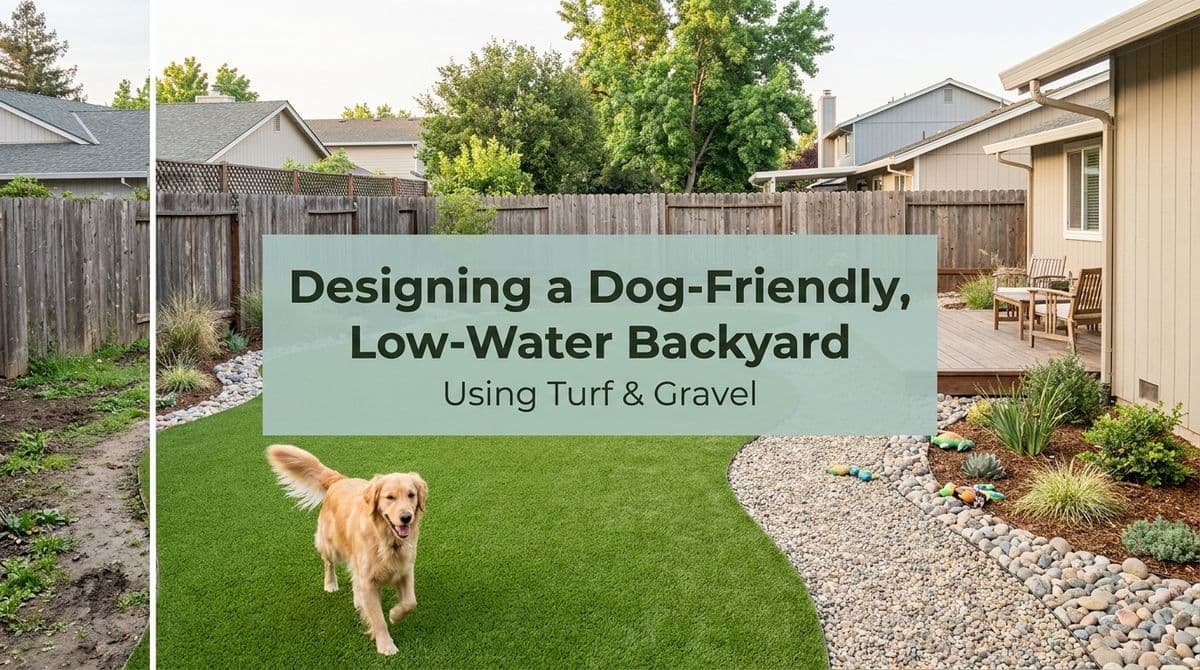
Turning a Muddy Dog Run into a Low-Water Backyard Oasis
We recently got a call from a homeowner — let’s call her Linda — in a five-year-old home with an 800-square-foot backyard. When we pulled up for our appointment, we saw exactly what she’d described on the phone: worn-out original sod, bare patches, and muddy lanes where her two dogs ran the fence line.
Like a lot of people who call us, Linda wanted a simple, budget-conscious design that could handle dogs, use less water, and still look nice. She already had some stone around the perimeter and was thinking about extending those rock beds and putting pet-friendly artificial turf in the main lawn area.
On our walk-through, we talked her through the same questions we answer for homeowners all the time: turf vs. landscape stone, drainage, odor control, and whether turf would get too hot for paws. In this post, we’ll walk you through how we think about those trade-offs so you can plan your own dog-friendly, low-water backyard.
Artificial Turf vs. Stone for Dog Areas
When homeowners call us about muddy dog yards, we almost always end up talking about a mix of turf and decorative rock. That’s exactly what Linda wanted, and it’s a combination that works really well in our installations.
Here’s how we usually break it down with customers like Linda:
Artificial turf for the main play area – Soft underfoot, always green, no muddy paws, and easy to hose down.
Landscape rock around the perimeter – Great for high-traffic edges, under drip lines, and around plant beds, plus lower cost than turf.
In our projects, turf is typically the “living room” where the dogs and kids hang out, and rock is the durable frame around it. That setup gave Linda a clean, usable lawn without turning her whole yard into a rock-only xeriscape.
Designing for Dogs: What We Look At On-Site
When we step into a backyard like Linda’s, we’re looking at a few key things before we ever talk numbers:
Size and layout – In her case, about 800 sq. ft. with existing rock beds we could extend.
Dog traffic patterns – Where they run, where they like to pee, and how they enter/exit the yard.
Sun exposure – Full sun versus shade affects both heat and drainage planning.
Water restrictions – We’re designing for minimal irrigation long term.
Based on that, we sketch a simple turf “pad” for the main lawn and decide where stone makes the most sense — often along fence lines, around foundations, and in side yards that don’t need soft grass.
Pet-Friendly Turf: Backing, Drainage, and Heat
Linda had three big concerns we hear a lot: drainage, odor, and heat. In our installations, we address all three together rather than as separate problems.
Woven backing for faster drainage
For dog yards, we strongly recommend pet-specific turf with a woven backing. Unlike older styles that rely on small punched holes, woven backings allow urine to drain anywhere through the surface instead of migrating to a few spots.
In our installs, we pair that turf with a compacted base layer that’s graded for runoff, so water (and cleaning rinses) actually have somewhere to go instead of pooling. That’s a big part of long-term odor control.
Heat-reducing “cool fiber” turf
Linda had also heard that turf gets hot. She’s right — any synthetic surface will run warmer than natural grass. In our experience, though, the right product choice makes a noticeable difference.
We often recommend turfs with “cool fiber” technology, which reflect more sunlight instead of absorbing it. Are they as cool as a bluegrass lawn? No. But in our yards, they’re far more comfortable than the dense, rubber-filled athletic fields at local parks. For most homeowners, that’s an acceptable and very livable middle ground.
Odor Control: Infill and Maintenance That Actually Work
When people call us about “stinky turf,” it’s almost always a combination of the wrong infill and not enough rinsing. We try to set expectations clearly during the estimate so there are no surprises later.
Choosing the right pet infill
In our pet installs, we typically use a specialized antimicrobial infill instead of plain sand or rubber. The benefits:
Helps inhibit bacteria growth that causes odors
Absorbs and reduces urine smells
Reflects more heat than black rubber infill
It costs more up front but pays off in fewer odor issues and a cooler surface, especially in sunny Colorado backyards.
Simple cleaning routine for dog owners
Even with the right infill, a little maintenance goes a long way. Here’s the routine we walk our customers through:
Solid waste: Pick up promptly, then do a quick hose rinse if needed.
Urine areas: Once or twice a week, hose those zones until the water runs clear.
Deeper clean: Occasionally use a pet-safe enzymatic cleaner if odors start to creep in.
In our own follow-ups with customers, yards that get this basic care rarely have serious odor issues, even with multiple dogs.
Decorative Stone and Drainage: What’s Included and What’s Not
Linda also wanted to extend her existing stone beds and asked if that was included with turf pricing. For a complete turf install, we usually tell homeowners to budget around $11–$12 per square foot. That covers our labor, turf, base prep, infill, tax, and delivery for the turf area itself.
Landscape rock is priced separately because we calculate it by the ton and it’s less expensive than turf. In our estimates, you’ll see turf and rock broken out so you can adjust your design to fit your budget.
We’re often asked about French drains as well. In our company, we build in proper grading and a draining base under the turf, but full French drain systems are a separate scope of work. When we see a yard that truly needs one, we’ll explain that on site and offer specific recommendations.
HOA Approval and Next Steps
Linda, like many of our customers, needed HOA approval before moving forward. In our experience, backyard turf is rarely denied, but every community is different. We help by providing:
Product specs and photos of the turf
A simple sketch of the turf and gravel layout
Color samples if your HOA requests them
Once homeowners have approval, we schedule the install, handle removal of the old lawn, set the base, install turf and landscape rock, and leave you with a dog-ready, low-water yard you can actually use.
Planning Your Own Dog-Friendly, Low-Water Backyard
When homeowners call us with muddy, over-used yards like Linda’s, our goal is always the same: design a practical, durable space that fits their budget. For many, that means pet-friendly turf in the middle, stone around the edges, good drainage underneath, and the right infill to keep odors in check.
If you’re staring at bare spots and paw prints on the floor every time it rains, we’re happy to walk your yard with you, just like we did with Linda, and talk through what will work best for your dogs, your water bill, and your HOA. With the right plan, you can have a yard that looks good, uses less water, and actually stands up to real-life pets.